
Working Hours
Daily from 10:00 AM to 12:00 AM
Working Hours
Send Us a Message
Call Us
Visit Us
Cervical Herniated Disc Symptoms
Discover practical rehabilitation insights from our specialists.
September 23, 2026
Learn about cervical herniated disc symptoms, from neck and shoulder pain to hand numbness and arm weakness, and find out when medical assessment or urgent care is needed.
Cervical herniated disc symptoms appear when part of a disc between the vertebrae in the neck bulges out and irritates or compresses a nearby nerve. Symptoms vary depending on the location of the disc and the affected nerve. They may be limited to neck pain or extend to the shoulder, arm, and hand, with possible numbness, tingling, or weakness in certain muscles.
Some people have a cervical disc herniation without noticeable symptoms. In other cases, symptoms may begin after a sudden movement, physical effort, or injury. They may also develop gradually as the discs undergo natural age-related changes.
Recognizing the symptoms can help you seek appropriate assessment at the right time, but symptoms alone cannot determine the severity of the condition or the best treatment. Learn more about Miami Physiotherapy and Rehabilitation Center services, or book an assessment if your symptoms continue.
The cervical spine consists of the vertebrae in the neck. Flexible discs lie between these vertebrae and help absorb shock and support movement. Each disc has a softer inner material surrounded by a stronger outer layer.
A herniated disc occurs when part of the inner material pushes through a weak or torn area in the outer layer. If the disc comes close to or presses on a nerve, symptoms may develop in the neck, shoulder, arm, or hand.
An abnormality seen on an imaging scan does not always cause symptoms. For this reason, a physician interprets imaging findings together with the patient’s symptoms and physical examination rather than relying on the scan alone.
Symptoms may affect one side of the body or both sides. Possible symptoms include:
Neck pain.
Neck stiffness or limited neck movement.
Pain that travels to the shoulder, arm, or hand.
Numbness or tingling in the arm, hand, or specific fingers.
Weakness in the arm or hand muscles.
Difficulty lifting objects or gripping them.
Dropping objects because of reduced sensation or muscle strength.
Burning pain, pins and needles, or electric-shock-like pain.
Pain that worsens with certain neck movements, coughing, or sneezing.
According to Mayo Clinic, a herniated disc in the neck may cause pain, numbness, or weakness in the neck, shoulders, arms, or hands depending on the affected nerve.
Pain may occur in the middle of the neck or on one side. It may become worse when turning the neck, looking down for a long time, or maintaining a fixed position. Neck pain may also be accompanied by stiffness or difficulty finding a comfortable position during sleep or work.
Not every case of neck pain is caused by a herniated disc. Pain may also result from muscle strain, poor sitting posture, joint degeneration, or an injury to the surrounding tissues. Assessment is recommended when pain persists or affects movement and daily activities.
For practical advice on reducing neck strain at work, read Neck Pain from Desk Work: A Daily Routine for Prevention and Improvement.
When a cervical disc irritates one of the nerves leaving the neck, pain may travel from the neck into the shoulder or arm. The pain may be sharp or burning, and in some cases it may feel like an electric shock.
The pain may follow a specific path rather than affecting the entire arm. The exact area depends on the affected spinal level and nerve. However, the affected level cannot be identified accurately from the location of pain alone because several conditions may produce similar symptoms.
A cervical herniated disc may cause numbness or tingling in the hand or certain fingers. This can occur when nerve signals are affected along the nerve pathway that begins in the neck.
Pay attention to how long the numbness lasts, whether it is getting worse, and whether it is accompanied by weakness. Hand numbness may also result from nerve compression at the elbow or wrist, or from other medical conditions. Persistent numbness should therefore be assessed instead of automatically being attributed to a cervical disc problem.
Weakness may appear as difficulty lifting the arm, carrying objects, opening a container, or holding tools. Some people notice that objects fall from their hand more often than usual or that one hand feels less powerful.
New or progressive weakness is more important than pain alone and requires medical assessment. Do not delay evaluation if weakness affects hand use, walking, or balance.
Some neck conditions may be associated with pain at the back of the head or headaches related to tight neck muscles. However, a headache alone does not confirm a cervical herniated disc. Headaches have many possible causes and may require a separate evaluation, particularly when they are sudden, severe, or accompanied by vision changes or other neurological symptoms.
Seek prompt medical assessment if severe neck pain or a headache begins after an injury or is accompanied by weakness, balance problems, or other neurological changes.
A cervical herniated disc may be associated with several factors, including:
Natural age-related changes in the discs.
Prolonged sitting with the head positioned forward.
Frequent phone use with the neck bent downward.
Lifting or carrying objects incorrectly.
Sudden twisting or movement.
Neck injuries or accidents, including whiplash-type injuries.
Work that requires looking down or maintaining the same position for long periods.
Weak neck and upper-back muscles.
Low levels of physical activity.
Smoking, which may affect disc health over time.
Having one of these risk factors does not guarantee that a herniated disc will develop. Likewise, neck pain does not prove that one specific posture or movement caused the problem.
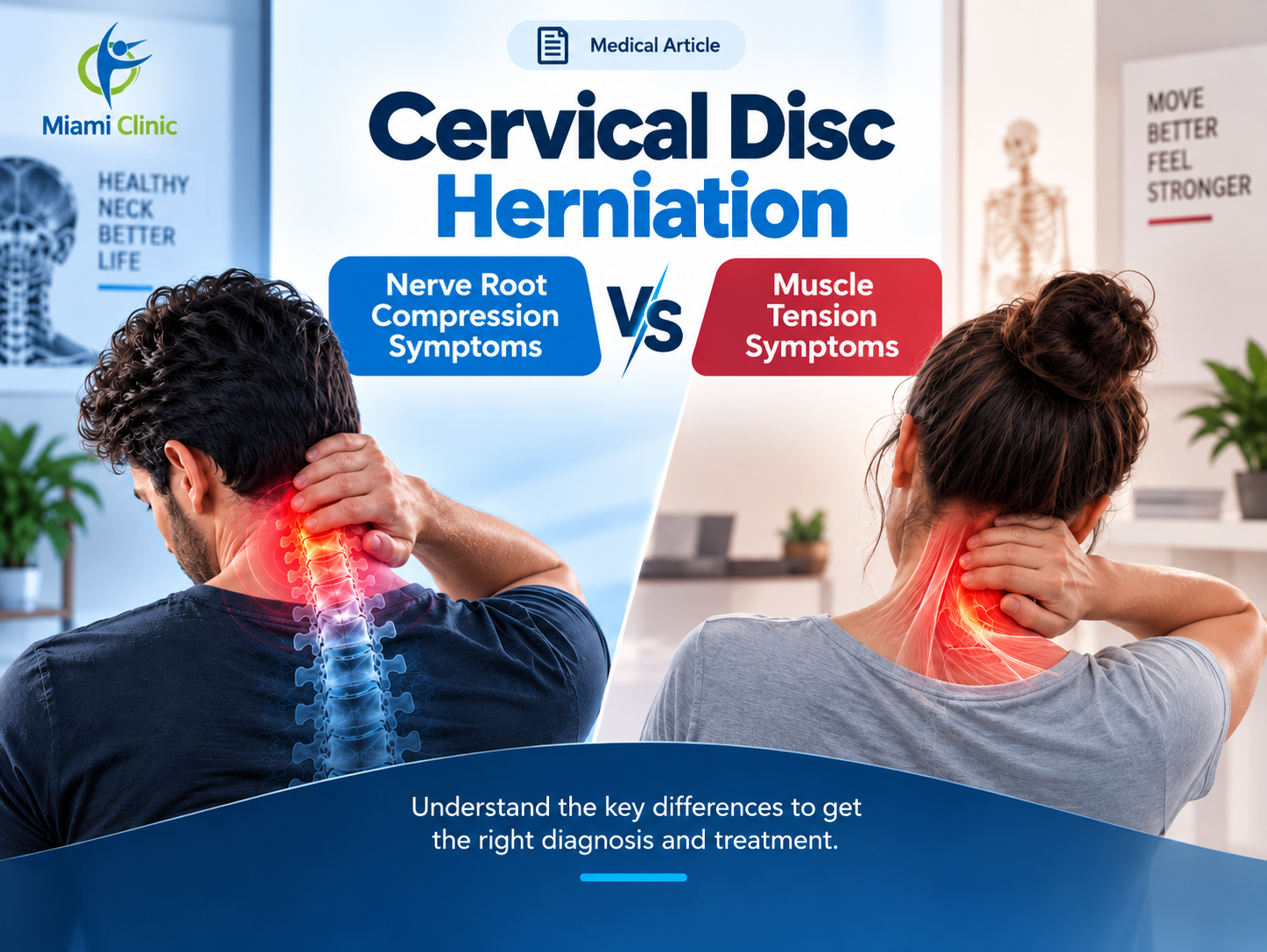
Neck muscle strain and cervical disc problems can feel similar, but some general features may help provide an initial understanding.
Muscle strain is often experienced as localized pain or stiffness in the neck and upper back. Nerve-related pain may feel burning, electric, or sharp and may travel to the shoulder or arm.
Numbness and tingling are not usually the main symptoms of a simple muscle strain. Numbness or tingling that travels into the hand or specific fingers may indicate nerve involvement, although it does not confirm a herniated disc by itself.
Pain may cause a person to use the arm less because movement is uncomfortable. True weakness in the hand or arm, dropping objects, or difficulty lifting the arm requires medical and neurological assessment.
Muscle strain may gradually improve with relative rest and appropriate movement. Persistent radiating pain, numbness, or weakness requires further evaluation instead of relying only on home treatment.
This comparison is not a self-diagnosis tool because neck symptoms can result from several different conditions.
Medical or professional assessment is recommended when neck pain travels to the shoulder, arm, or hand, or when numbness, tingling, or weakness develops. Assessment is also advisable when symptoms affect sleep, work, driving, or the ability to use the hand.
Seek medical advice if:
Pain continues for several weeks without improvement.
Pain becomes more severe or occurs more frequently.
Numbness is persistent or getting worse.
Weakness develops in the arm or hand.
Objects repeatedly fall from your hand.
Neck movement becomes significantly restricted.
Symptoms begin after an accident or injury.
Pain is accompanied by fever, unexplained weight loss, or severe night pain.
An assessment may include tests of neck movement, arm and hand strength, sensation, and neurological reflexes. Imaging, such as an MRI, may be requested when appropriate. Imaging is not necessary for every case of neck pain; a physician determines its value based on the symptoms and examination.
Some symptoms require urgent medical attention because they may indicate significant pressure on the nerves or spinal cord. Seek urgent care if you experience:
Severe or progressive weakness in the arms or legs.
Significant difficulty walking or loss of balance.
Difficulty using the hands for precise movements.
Loss of bladder or bowel control.
Severe or widespread numbness affecting more than one limb.
Symptoms that begin after a serious accident or neck injury.
Severe sudden pain accompanied by worsening neurological symptoms.
Do not wait for these symptoms to improve on their own. For general information about urgent warning signs associated with disc problems, see the NHS guidance on slipped discs. Progressive weakness, difficulty walking, or balance problems should be assessed urgently when they occur with neck symptoms.
Diagnosis begins with questions about when the pain started, where it is located, and whether it travels to the shoulder, arm, or hand. The healthcare professional may ask about movements that increase pain, previous accidents or physical effort, the nature of the patient’s work, and the effect of symptoms on sleep and daily activities.
The examination may assess:
Neck range of motion.
Arm and hand strength.
Sensation.
Neurological reflexes.
Hand function and grip.
Movements that reproduce or relieve symptoms.
An MRI or other investigation may be requested when symptoms persist, weakness is present, or the cause is unclear. An MRI result should be interpreted together with the symptoms and examination findings.
Physiotherapy may help reduce pain, improve neck and shoulder movement, strengthen supporting muscles, and improve the ability to perform daily activities. The treatment plan varies according to the symptoms and assessment findings.
A physiotherapy program may include:
Gentle neck and shoulder mobility exercises.
Strengthening exercises for the neck, upper back, and shoulder muscles.
Exercises to improve head and upper-body posture.
Education on sitting, working, and using a phone more safely.
Manual therapy when appropriate.
Spinal traction techniques when indicated after assessment.
Supportive treatment modalities selected according to the condition.
Miami Physiotherapy and Rehabilitation Center provides physiotherapy programs for lumbar and cervical herniated discs. Programs may include therapeutic exercises, manual therapy, and spinal traction techniques when appropriate and after the diagnosis has been reviewed.
Do not begin intense exercises or use home traction devices when numbness, weakness, or radiating pain is present without professional guidance.
The following habits may help reduce neck strain, although persistent symptoms still require assessment:
Keep the computer screen at eye level instead of bending the head forward for long periods.
Take short movement breaks during desk work.
Avoid holding the phone between your shoulder and head.
Keep your back supported and your feet on the floor when sitting.
Use a comfortable pillow that does not force the neck into excessive elevation.
Avoid carrying heavy objects on one shoulder for long periods.
Avoid sudden or forceful neck movements.
Maintain light activity that does not increase symptoms.
Stop any exercise that causes numbness, weakness, or radiating pain.
For additional advice about work posture and movement breaks, read Neck Pain from Desk Work.
Miami Physiotherapy and Rehabilitation Center provides programs for cervical herniated discs. The assessment begins by reviewing symptoms and medical history, then evaluating movement, strength, pain levels, and the daily activities affected by the problem.
Depending on the assessment, the plan may include therapeutic exercises, manual therapy, or spinal traction techniques when appropriate. The center has a three-dimensional spinal traction device for suitable cases after assessment and review of the diagnosis.
Learn more about the center on the Miami Clinic About page. To book an appointment at the Dokki, Miami, or Moharam Bek branch, contact Miami Clinic.
Common symptoms include neck pain, pain that travels to the shoulder or arm, numbness or tingling in the hand or fingers, weakness in the arm or hand, and limited neck movement in some cases.
Not necessarily. Hand numbness may result from nerve compression in the neck, elbow, or wrist, or from other conditions. Persistent numbness or numbness accompanied by radiating pain or weakness should be assessed by a healthcare professional.
Yes. Cervical disc irritation may cause pain to travel into the shoulder and arm when a nearby nerve is affected. However, shoulder pain has many possible causes, so the location of pain alone cannot confirm the diagnosis.
It may cause weakness in the arm or hand when the affected nerve supplies those muscles. New or progressive weakness should be assessed promptly, especially if it is accompanied by dropping objects or difficulty performing precise movements.
No. Not every case requires surgery. Some cases improve with conservative treatment, physiotherapy, and monitoring. Persistent or progressive weakness, or significant nerve compression, may require an opinion from a spine specialist.
Some light activities may be appropriate if they do not increase pain or numbness. However, intense exercise and forceful neck movements should be avoided until the condition has been assessed. A professional can select appropriate exercises and intensity.
It may be suitable for selected cases after assessment. Cervical traction should not be used automatically or at home without professional guidance, especially when progressive weakness, increasing numbness, or other medical conditions are present.
Cervical herniated disc symptoms may include neck pain and stiffness, pain that travels to the shoulder or arm, hand numbness or tingling, and arm or hand weakness. These symptoms can resemble other conditions, so self-diagnosis is not sufficient.
If pain persists or numbness or weakness develops, book an assessment. If severe or progressive weakness, difficulty walking or balancing, or loss of bladder or bowel control occurs, seek urgent medical care.
Book an assessment at Miami Physiotherapy and Rehabilitation Center to identify an appropriate treatment plan.